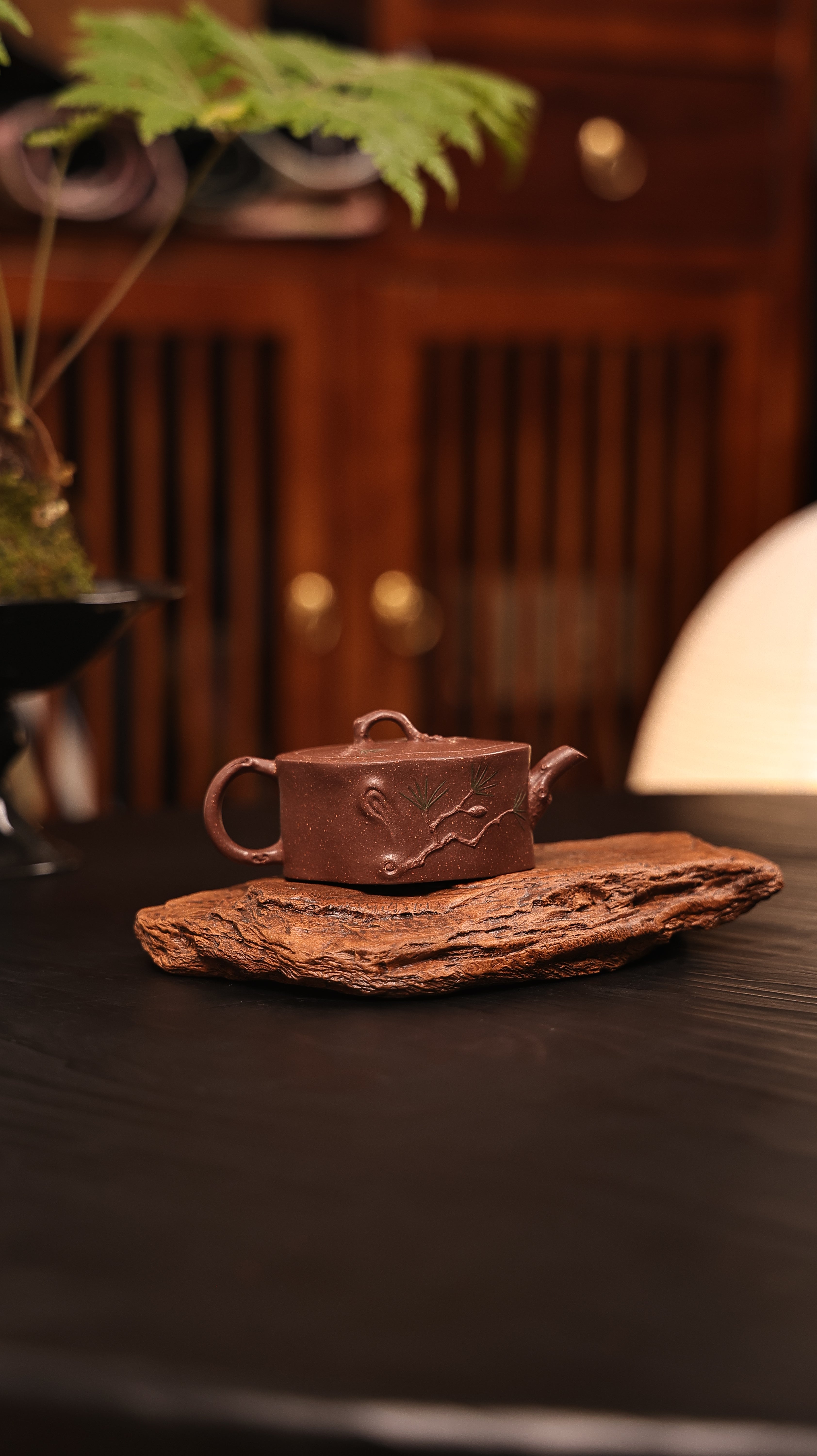
How can a Yixing Zisha Teapot be framed as a productivity or focus-enhancing tool?
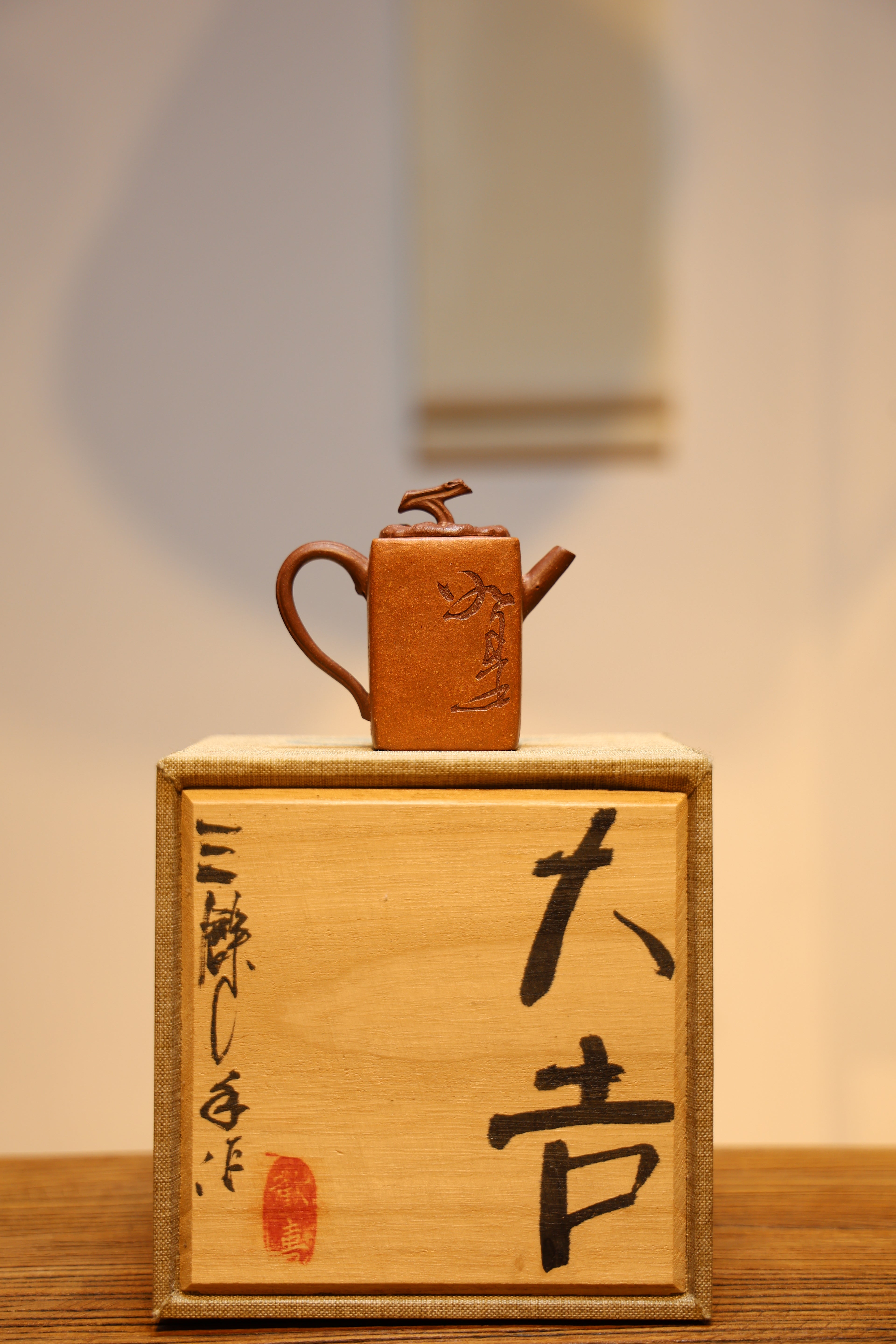
Continual lineage expresses Yixing earthenware alongside timespans,
Expressing exclusive attributes extracted across local violet particles, those jars accumulate a film during practice, heightening bouquet yielded from developed concoctions.
Comprehending Yixing Soil: Thorough Insights into Zisha
Many connoisseurs admire the unique texture of Yixing mulberry clay, a linchpin of conventional Chinese craft. Emanating from the Yixing region of Jiangsu province, this uncommon clay holds an elaborate mineral structure, that delivers incredible qualities to the crafted wares. Kinds within Zisha, including Zhuni Mud, Duan Ni Mud, and Jiang Xi Mud, each offers special pigments, surfaces, and curing traits, influencing the porosity and the peak note enhancement of the infusion.
Celestial Jar Practices: Exploring Expertise
Asian teapots embody exceeding mere vessels for concoction; they exemplify centuries of traditional expertise. From the celebrated Yixing clay variations, respected for their open nature which conveys special tones to the concoction, to the elegant porcelain from Jingdezhen, each piece narrates a record of commitment. The making process is an elaborate undertaking, often transferred through clans of artisans. These makers use classic systems such as hand-building, carving on wheels, and decorating, demonstrating profound reverence for the component and the practice itself. Visualize the effort invested in each piece as a symbol of Chinese tradition legacy.
- Eastern clay urns: a famous selection.
- Porcelain teapots: distinguished by their delicate design.
- Shaping techniques: a challenging yet fruitful procedure.
Purple Clay Pitcher Preservation: Caring for Your Cherished Item
Necessary maintenance of your unique Yixing Zisha flask is vital to maintaining its condition. Crafted from recognizable purple sand soil, these exceptional teapots gain a appealing patina after application, markedly boosting their allure. Shun soaps; a light rinse with temperate liquid is effective. Do not heated water for cleaning the teapot, as it may crack its fabric. Allow it to lose wetness away from direct radiance. Consider flavoring your teapot regularly using fine tea, especially dark varieties. Here is a brief overview:
- Swill with softly heated liquid.
- Do not use washers.
- Facilitate it to dry completely.
- Season with superior tea.
History of Yixing Teapots: From Basic Inception
The history of Yixing teapots launches initially during the Jin dynasty, around the 16th period. Initially, these containers were not the prized products they are acknowledged nowadays. They were produced by provincial potters using the sole purple clay harvested solely in the Yixing vicinity. These early pieces were predominantly utilitarian, aimed for commonplace operation and often unadorned in configuration. It was not until the following dynasty that they initiated to earn status beyond mere utility wares.
Choosing the Ideal Yixing Urn: A Elementary Overview
Navigating the universe of Yixing teapots can be challenging, but avoid concern! For novices, the critical factor is understanding the dirt. Original Yixing clay is prized for its ventilation, allowing the teapot to absorb the tea's flavor over time, heightening every extracting session. Ponder the design; traditional round shapes prevail, yet specific preferences are important. Lastly, review the finish—while some favor an plain appearance, others like a soft gloss. Take your time in the choice process—this is an deal in a esteemed piece of pottery.
Yixing Kettles and Their Significance on Chinese Infusion Culture
Zisha pitchers, derived from Yixing, China, have profoundly shaped historic Chinese infusion culture. These Yixing clay teapots, prized for their particular shade, fabric, and exceptional ability to impart a subtle savor to the drink, symbolize more than mere receptacles; they are valued objects and symbols of renown. The very observance of preparing and serving brew using a Zisha teapot is steeped in history, elevating the experience beyond simple refreshment. Dynasties of artisans have refined their techniques, passed down Yixing Teapot through descendants, resulting in highly sought-after pieces. Because of this, Zisha teapots are frequently gathered, playing a crucial part in cultivating Chinese appreciation for aesthetics and the tradition of tea ceremonies.
- Peculiar Clay Composition
- Imparting Subtle Flavor
- Exquisite Craftsmanship
Identifying Original Valuable Regional Teapots
Securing a genuine Yixing teapot can be a satisfying experience, but the environment is often infested with frauds. Differentiating between a original antique and a modern reproduction requires scrupulous inspection. Key signals include the clay's earthy shade, often displaying streaked surfaces, and the missing of modern curing imprints. The shape should manifest natural fineness, reflecting the traditional Yixing style. Finally, examining the producer's mark is necessary to verify certainty against published literature.
- Assess the clay's grain.
- Look for defects, indicative of crafted quality.
- Consult an professional for assessment.
Committing to 宜兴 Earthenware: A Elaborate Guide to Purple Clay Interpretation
The sector of Traditional Zisha pottery provides a special option for shrewd collectors. More and more, the price of these custom artifacts is determined by numerous variables, such as the category of Zisha, the skill of the maker, the artistic value, and, naturally, the existing supply. Learners should study on examining the distinct variants of Zisha clay—such as Chilled Stream, Hushed Pot, and Blush Clay—and examining the details linked to each. Rigorous scrutiny of the craft's shape, color, and badge is concurrently mandatory to make educated evaluations when investing.